
Dive Trips · Advanced · Playa Flamingo
Diving the Bat Islands
For a lot of divers, this is the whole reason they fly to Costa Rica. Bull sharks, up close, in the open blue — a roughly 45-to-50-minute run from Playa Flamingo to the edge of Santa Rosa National Park. It's advanced diving, and it's the kind of day you'll still be talking about years later.
The reason divers come to Costa Rica
Bull shark diving at its best — inside a protected marine reserve most boats can't reach quickly.
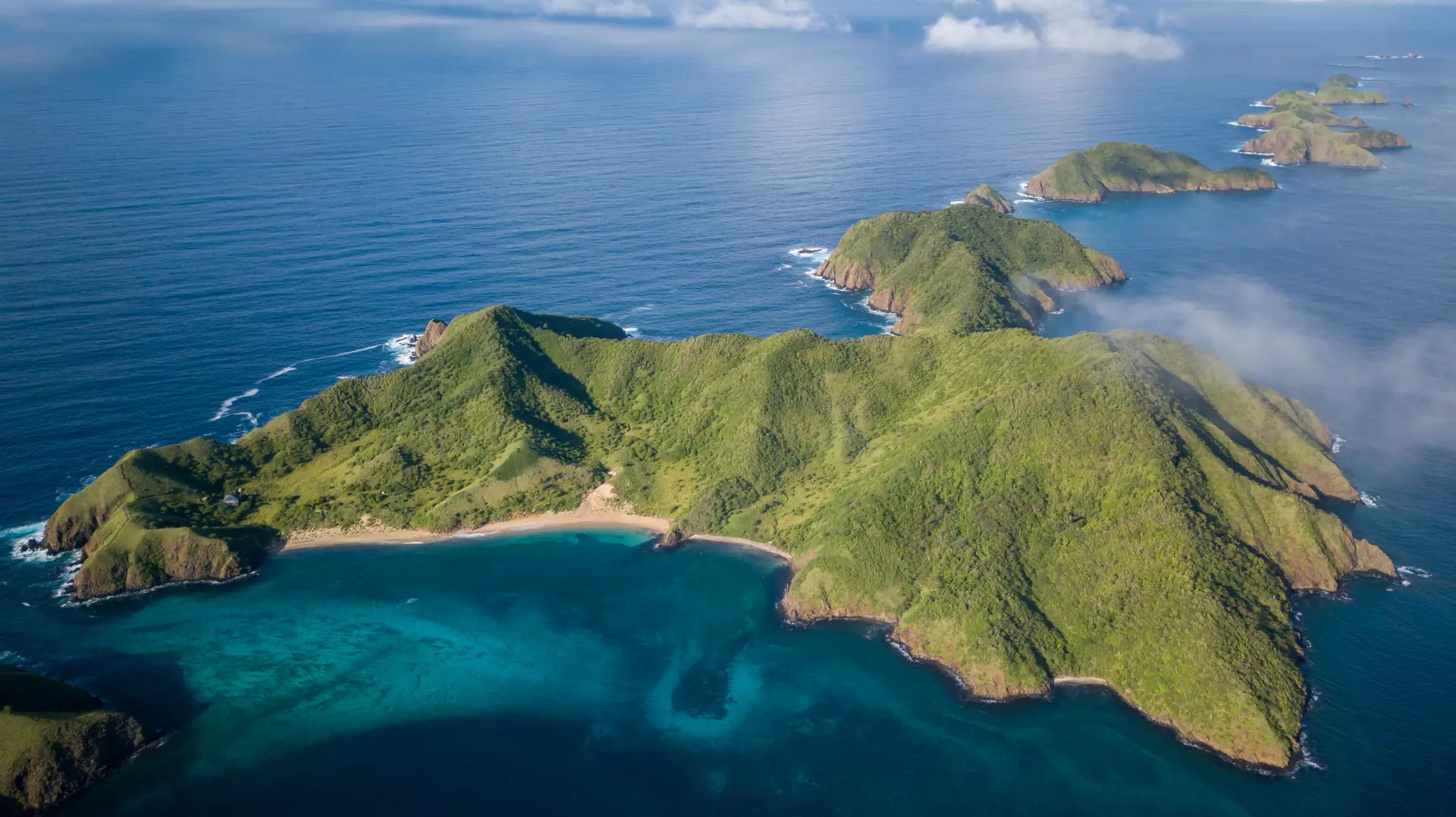
The Bat Islands — Islas Murciélago in Spanish — sit off the northern Guanacaste coast, right at the edge of Santa Rosa National Park (the same wild stretch that gave the world the surf breaks at Witches Rock and Ollie's Point). The whole area is a protected marine reserve, closed to fishing, and it shows. Huge schools of fish, several kinds of sea turtle, big schools of rays, whales and dolphins passing through in season — and the animal that put this place on the map for divers, the bull shark.
What you'll see down there
Big-animal territory
Protection from fishing pays off out here. This is one of the few places in Costa Rica where you've got a real shot at the headliner — but it's far from a one-species show.
Bull sharks at “The Big Scare”
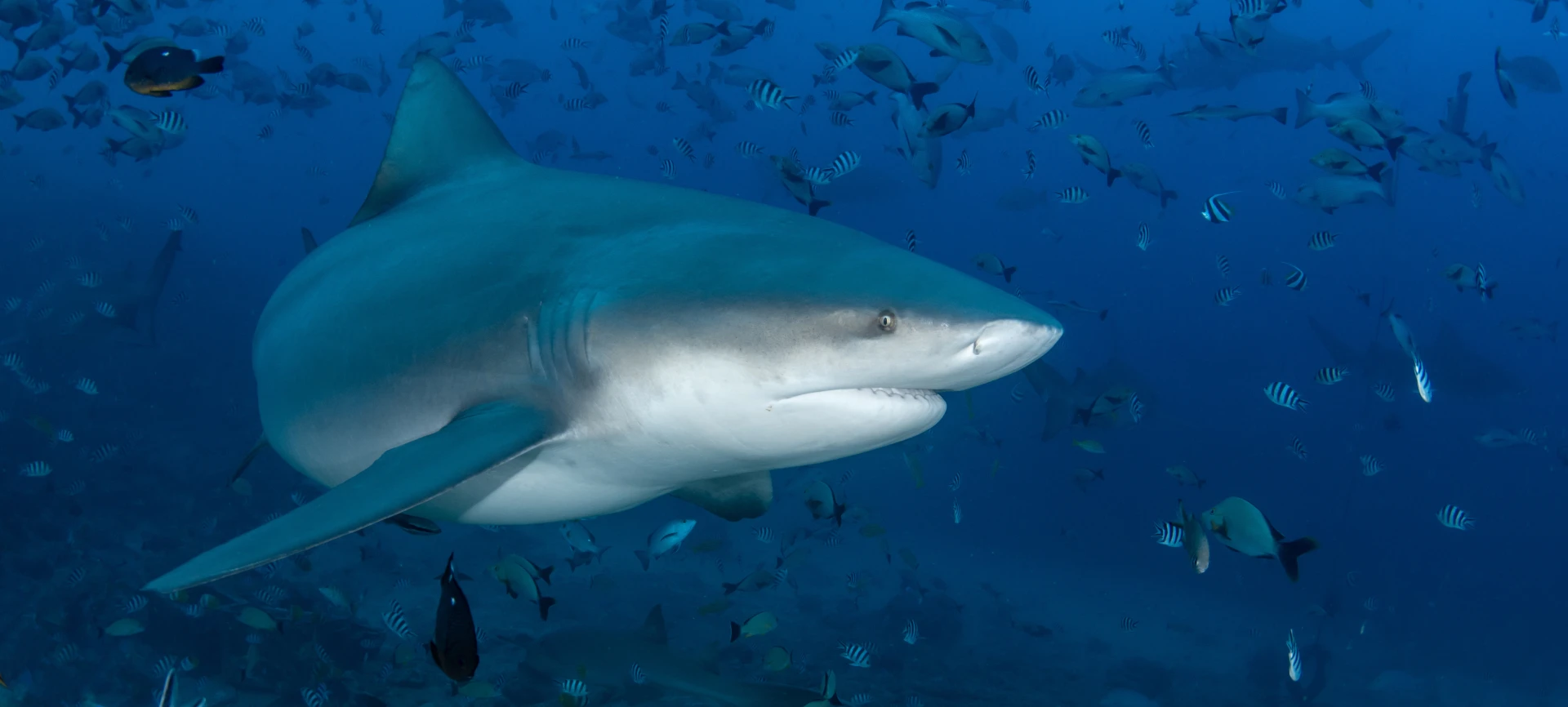
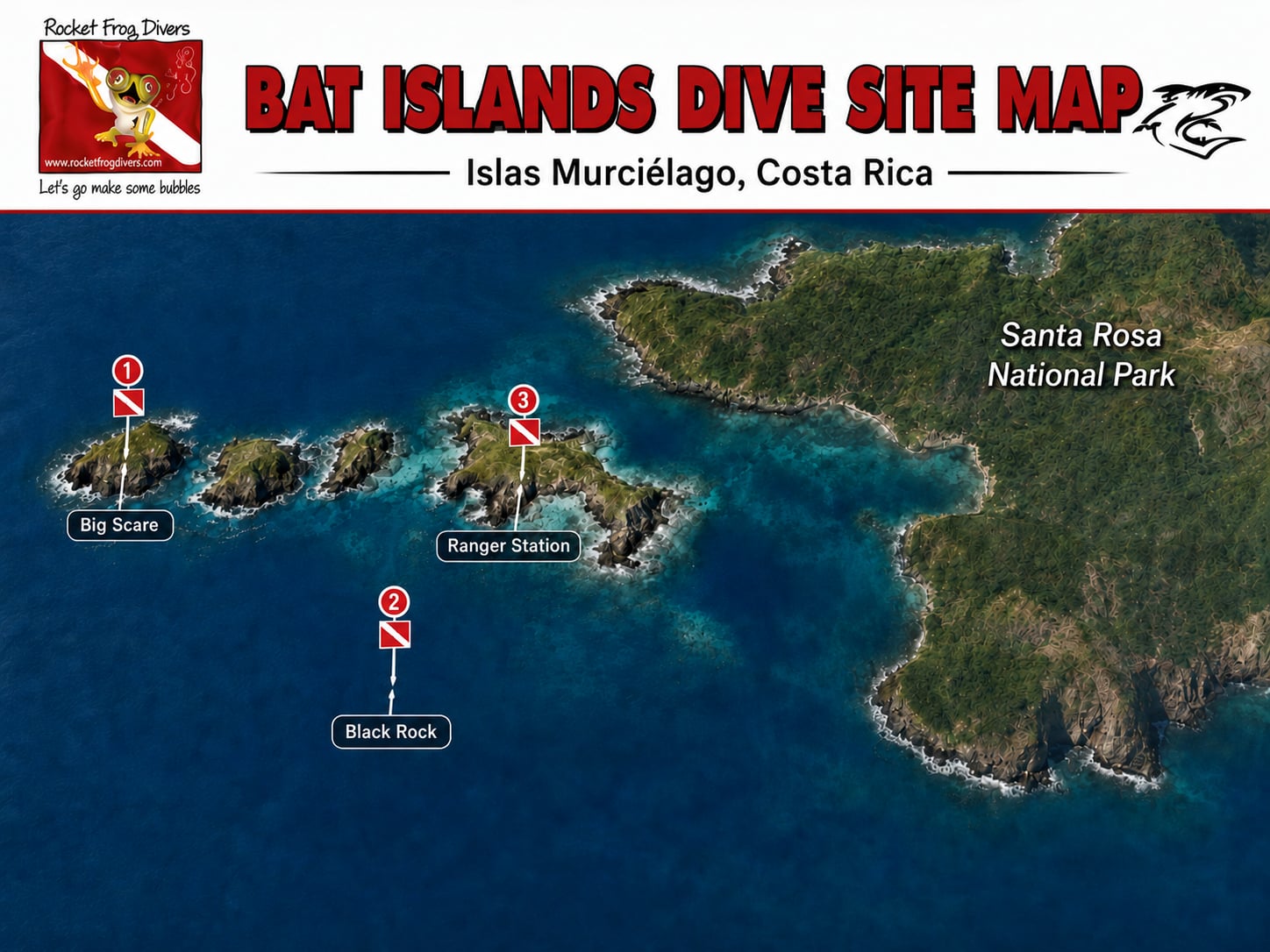
The famous dive is a site called the Big Scare, off the tip of the last island in the chain. For reasons nobody's fully worked out, a sizeable population of bull sharks holds here — big, powerful animals, and meeting one in open water is exactly as intense as it sounds. Bull sharks are around all year, but the trips and the sightings cluster from mid-May into early November.
This is an advanced dive, full stop — you'll want at least your Advanced Open Water. A few reasons: it can be deep (we regularly reach around 100 feet, depending on conditions and where the sharks are), the currents can be strong and come on without much warning, and there's often surge up top. To deal with the surge we do a negative descent — a backroll off the ribbed inflatable with no air in your BC, dropping fast to the calmer water 15 or 20 feet down and regrouping before the dive begins. It's not the place to be sorting out your buoyancy for the first time.
The bull shark is the headline, but the Big Scare also serves up the Giant Pacific manta now and then, clouds of jacks, plus eels, rays and more. Visibility is a genuine roll of the dice — anywhere from 15 to 90 feet — and the green season (mid-May to November) gives you the best odds.
Black Rock — the second dive
Your second dive is often Black Rock, a pinnacle that rises about a kilometre off the mainland, climbing from around 80 feet all the way to just above the high-tide line. It's a fish magnet. Drop in on one side and you descend into schools thick enough to swallow you whole; the whole dive is basically one slow 360 around the rock. If you've got air and time at the end, finning out into the blue for your safety stop can turn up entirely new schools and species. This one never lets you down.
Plan your dives
Honest conditions, no hype
The Bat Islands are a serious, rewarding dive — and we'd rather you show up knowing exactly what that means.
Season & the crossing
Bull sharks are around year-round, but we run the Bat Islands mostly from mid-May to November, when the green season brings the calmest seas and best conditions. Outside that window — especially the windy dry-season months — the open-water crossing is often too rough to attempt, so those days shift to the Catalinas and local sites.
What to expect underwater
Depths to around 100 feet, currents that can be strong and unpredictable, surge at the surface, and visibility anywhere from 15 to 90 feet. It's real diving — you'll want to be current-ready, comfortable with negative entries, and Advanced-certified.
How we run the Bat Islands trip
It's about a 45-to-50-minute run from Flamingo on our ribbed inflatable — less than half what a lot of boats take — on fast, purpose-built boats. You'll get a thorough briefing before you splash and experienced guides in the water who dive this site constantly. The day includes lunch and your Santa Rosa National Park entrance fee (it's all in the prices). It's an advanced trip, so at minimum you'll need your Advanced Open Water — not there yet? We can get you sorted before the trip, and a couple of days at the Catalinas makes a great warm-up.
Bat Islands diving FAQ
Do I need to be an advanced diver?
Yes — Advanced Open Water is the minimum. The Big Scare can reach around 100 feet, the currents can be strong and unpredictable, and we often enter with a negative descent because of surge. Confidence and control in the water matter as much as the card itself.
When's the best time to dive the Bat Islands?
Mid-May to November. Bull sharks are around all year, but that green-season window brings the calmest crossings and the best conditions. Outside it, the open-water run is often too rough to attempt.
Are bull sharks dangerous — is it safe?
These are large wild predators and we treat them with respect: thorough briefings, experienced guides, and conservative diving. It's an advanced environment, not a petting zoo — and that seriousness is a big part of why the dive is so rewarding.
What else will I see besides bull sharks?
The Giant Pacific manta turns up, along with schooling jacks, rays, turtles, eels and walls of fish. On the crossing you might spot whales or dolphins in season.
Ready to make some bubbles?
If bull sharks are on your Costa Rica list, this is the trip. Tell us your dates and your certification level, and we'll build the day around the best conditions.
Book your Bat Islands dive with Rocket Frog Divers →